Feast Days ~ January 2026
On January 11, we celebrate the feast day of the Baptism of the Lord which marks the end of the Christmas season for the Church. Jesus provided us an example that He, although not needing Baptism, still submitted Himself to be baptized by St. John the Baptist. We should be very thankful for God’s gift to us in the sacrament of Baptism so that original sin from Adam and Eve may be wiped away and we are now welcomed into the Church as brothers and sisters in Christ.
“It happened in those days that Jesus came from Nazareth of Galilee and was baptized in the Jordan by John. On coming up out of the water he saw the heavens being torn open and the Spirit, like a dove, descending upon him. And a voice came from the heavens, ‘You are my beloved Son; with you I am well pleased.’” (Mark 1:9-11)
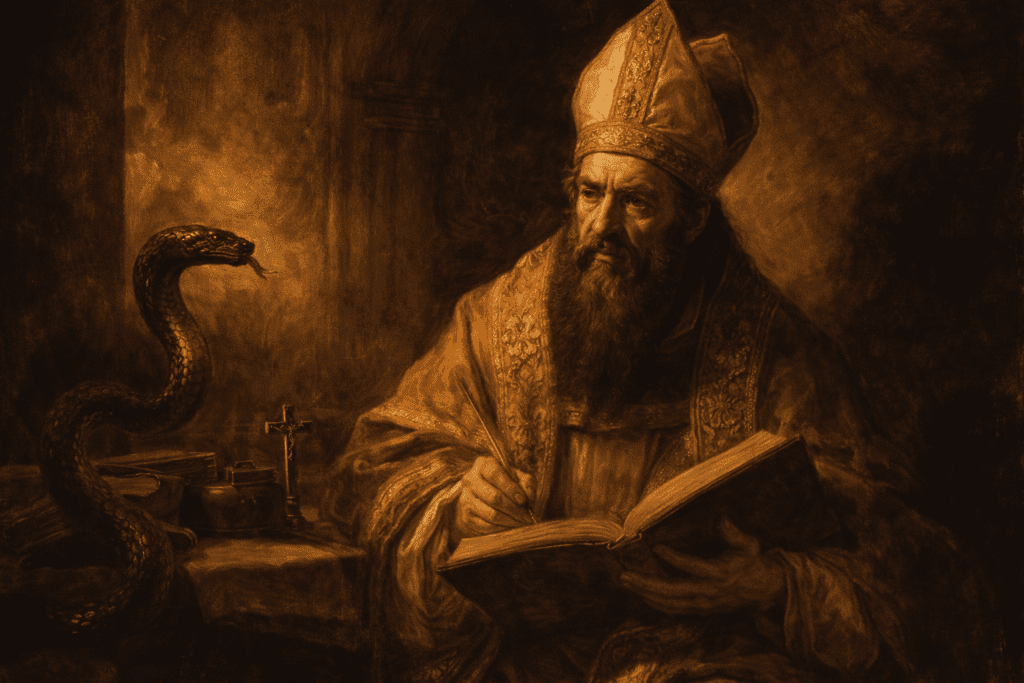
On January 12, we celebrate the feast day of St. Hilary of Poitiers, patron saint against snake bites. St. Hilary, who lived in the 4th century in France and was raised as a pagan, found God in the Scriptures and later became the Bishop of Poitiers. During one of the most difficult periods of Church history, he defended the sacred humanity of Jesus and wrote his most important work, “On the Trinity,” which reinforced the Bible’s consistent witness to this central mystery of our Christian faith. Although exiled by Emperor Constantius II in response to the other bishops for his controversial beliefs, he returned to his diocese at Poitiers after the emperor’s death in 361 and died there in 367. He was named a Doctor of the Church in 1851.
Prayer in Honor of St. Hilary of Poitiers for Perseverance in Faith
Father, keep us from vain strife of words. Grant to us constant profession of the Truth! Preserve us in a true and undefiled faith so that we may hold fast to that which we professed when we were baptized in the Name of the Father, Son and Holy Spirit, that we may have Thee for our Father, that we may abide in Thy Son and in the fellowship of the Holy Spirit. Through Jesus Christ, Our Lord. Amen.
Who is the patron saint of athletes and soldiers? That would be St. Sebastian because of his energetic evangelization! The Catholic Church celebrates his feast day on January 20. As a soldier in the Roman army, St. Sebastian converted many of his fellow soldiers by sharing his faith with them. As a result, Emperor Diocletian sentenced him to death by arrows. While he was left to die alone tied to a tree with several arrows embedded into him, a Christian woman found him and nursed him back to health. Once he was well again, he refused to let fear of death stop him from preaching Christ to the world and so returned to the Emperor to share the Gospel. He was sentenced to death for the second and final time for his faith.
On January 23, we celebrate the feast day of St. Vincent Pallotti, an Italian cleric and patron saint of the Catholic Apostolate Center. St. Vincent founded the Union of the Catholic Apostolate in 1835 which is an association of lay people, religious, and clergy that work together assisting the Church’s missionary work, reviving the Catholic faith, and engaging in universal charity throughout the world. The Society of the Catholic Apostolate (Pallottine Fathers and Brothers) is one religious community that emerged from this association. St. Pallotti believed that everyone throughout the world is called to be an apostle of Jesus Christ.
On January 24, we celebrate the feast day of St. Francis de Sales, patron saint of writers and journalists. St. Francis, lawyer and priest, defended the truths of Catholicism in Geneva after the Reformation. He is well-known for his inspiring works, “The Introduction of the Devout Life” and “A Treatise on the Love of God” which continue to inspire Catholics today.
“Do not desire to be what you are; desire to be very well what you are.” -St. Francis de Sales
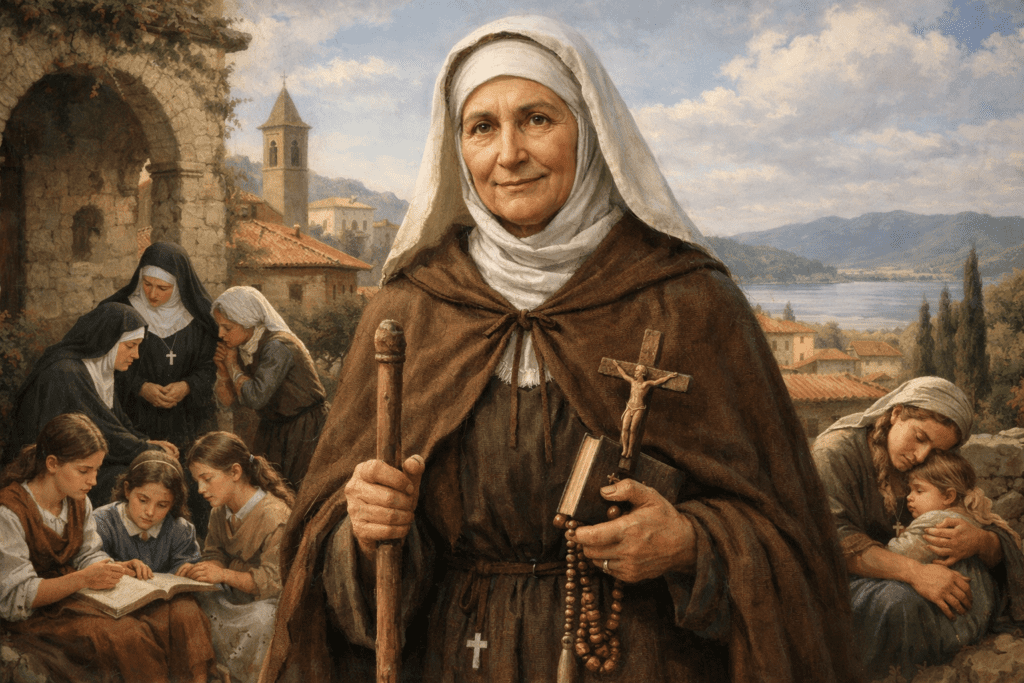
On January 27, we celebrate the feast day of St. Angela Merici, patron saint of handicapped people and those grieving the loss of their parents. In the early 1500’s, St. Angela founded the Ursuline Sisters in Italy which focused on serving and teaching the poor. She is known for her deep faith and work in women’s education emphasizing their equality and dignity. St. Angela designed an education program for these women with little money and no power that allowed them to remain living in their own homes while still receiving a religious education. Their lives were committed to Jesus Christ and service to His Church.
“Be bound to one another by the bond of charity, treating each other with respect, helping one another, bearing with one another in Christ Jesus.” -St. Angela Merici
On January 28, we celebrate the feast day of St. Thomas Aquinas who was born in 1225 in Sicily, Italy. St. Thomas was born into a very wealthy and powerful family who wanted him to join the Benedictines but instead, against their will, he joined the Dominicans so he could live a life of study. He is one of the great teachers of the early Catholic Church and has been bestowed the titles of Doctor of the Church and Angelic Doctor. He is known for Thomism which is a school of thought based on the Aristotelian understanding of the whole natural order coming from God our Creator and reasoning as a divine gift from God to humanity. His most influential work, the last and unfinished Summa Theologica, which deals with the whole of Catholic theology.
“Grant me, O Lord my God, a mind to know you, a heart to seek you, wisdom to find you, conduct pleasing to you, faithful perseverance in waiting for you and a hope of finally embracing you.” -St. Thomas Aquinas
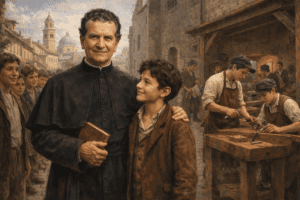
On January 31, we celebrate the feast day of St. John Bosco, patron saint of young apprentices and Catholic publishers. He was born in 1815 in Turin, Italy and founded the Salesian religious order which is among the largest and most influential communities in the Catholic Church. While visiting the prisons, he noticed a large number of boys between 12 and 18 inside. This moved him to seek out young boys and men in the streets and provide them with an education based on love and support rather than punishment. He provided lodging and sought out work for boys who needed it. He negotiated new rights for boys employed as apprentices which forbade beatings, unrelated manual labor and menial work unrelated to their apprenticeship. He also sought out boys who would make good priests and encouraged them to become priests.
“Young people should not only be loved but that they themselves should know that they are loved.” -St. John Bosco